


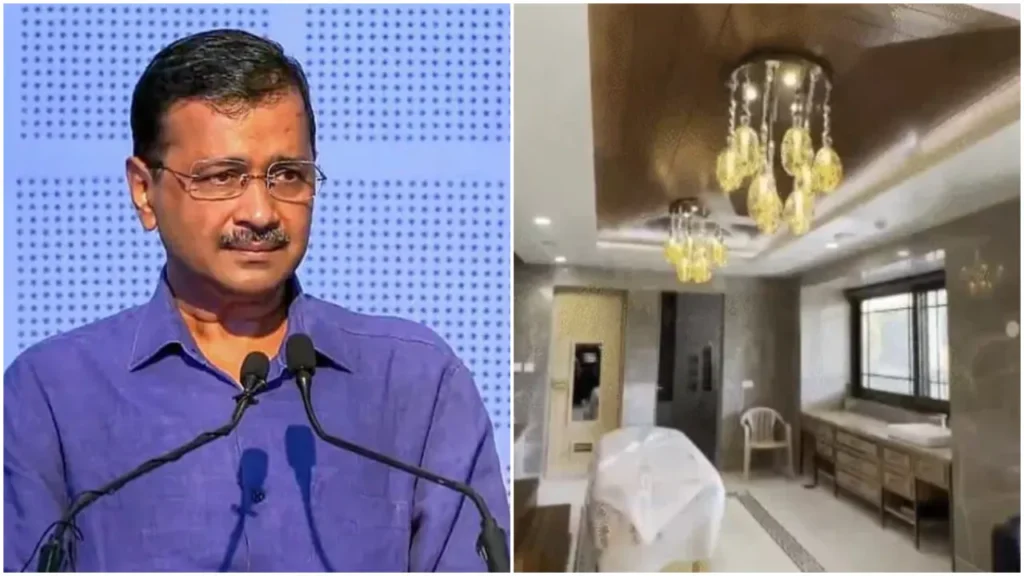
The renovation of former Delhi Chief Minister Arvind Kejriwal’s official residence has sparked a major controversy after a Comptroller and Auditor General (CAG) report exposed a massive cost escalation. Initially estimated at ₹7.91 crore, the total expenditure surged to ₹33.66 crore a shocking increase of over 342%.
Moreover, the report highlights that ₹18.88 crore was spent on high-end “ornamental and superior specification” items. Consequently, the issue has reignited the political debate around the so-called “Sheesh Mahal,” which had already become a key election issue in Delhi.
| Detail | Information |
|---|---|
| Property | 6 Flag Staff Road, Delhi (Former CM Residence) |
| Original Estimate | ₹7.91 Crore |
| Final Cost | ₹33.66 Crore |
| Cost Overrun | 342.31% Above Estimate |
| Ornamental Items Spent | ₹18.88 Crore |
| Area Increase | 1,397 sqm to 1,905 sqm (36%) |
| Renovation Period | 2020 – April 2022 |
| Report Tabled By | CM Rekha Gupta (BJP) |
| Conducted By | Comptroller & Auditor General (CAG) |
| BJP’s Nickname | “Sheesh Mahal” |
How the Cost Jumped from ₹7.91 Crore to ₹33.66 Crore
The project began in 2020 during the Covid period with a standard estimate prepared by the Public Works Department (PWD). However, the cost quickly spiraled out of control.
Initially awarded at ₹8.62 crore, the project saw multiple revisions. Subsequently, additional expenses were added, including ₹1.62 crore for kitchen upgrades, ₹9.09 crore for expanding the built-up area, ₹5.73 crore for beautification, and ₹9.34 crore for ornamental works.As a result, the total cost exceeded ₹33 crore. Furthermore, the CAG noted that estimates were revised at least four times, which raises serious concerns about planning and financial discipline.
Luxury Spending – What ₹18.88 Crore Was Used For
The most controversial aspect of the report is the extensive spending on luxury items. According to the audit, the residence included high-end fittings and premium appliances rarely seen in government housing.
For example, ₹96 lakh was spent on curtains, ₹50 lakh on carpets, and ₹73 lakh on LED TVs. Additionally, a jacuzzi, sauna, and spa setup costing ₹19.5 lakh was installed.
Moreover, the residence featured an 88-inch OLED TV worth ₹28.9 lakh, multiple premium televisions, expensive kitchen appliances, and even a minibar. Therefore, critics argue that such spending goes far beyond basic requirements of an official residence.
CAG Flags Irregularities in PWD Execution
The CAG report has pointed out several irregularities in the execution of the project. Firstly, the selection of consultants was termed doubtful. Secondly, the tendering process was restricted, with only a few contractors invited to bid.
Additionally, the same contractor continued to handle expanded work without fresh tenders. Consequently, this raises concerns about transparency and competitive pricing.
Furthermore, the built-up area of the residence was increased by 36% without proper approval. The report also highlighted that funds allocated for certain structures were diverted, while planned constructions were either altered or not executed as intended.
Political War – BJP vs AAP Intensifies
The issue has quickly turned into a major political flashpoint. The BJP has strongly criticized the renovation, branding the residence as a “Sheesh Mahal” and accusing the Aam Aadmi Party (AAP) of hypocrisy. Meanwhile, BJP leaders claim the actual cost could be even higher, possibly reaching ₹75–80 crore when all associated expenses are included. On the other hand, AAP has dismissed these allegations as politically motivated.
Arvind Kejriwal has also responded sharply, countering criticism with remarks targeting political opponents. Therefore, the controversy has now evolved into a full-scale political battle ahead of future elections.
Why This Controversy Matters
This issue goes beyond politics and raises fundamental questions about the use of taxpayer money. While official residences do require maintenance and upgrades, the scale of spending highlighted in the report has shocked many observers.
Moreover, the timing of the renovation during the Covid period has added to public criticism. Consequently, the debate now centers on accountability, transparency, and governance standards.
The CAG report on the Delhi CM residence renovation has become a landmark document in the debate over public spending. With a 342% cost overrun and significant expenditure on luxury items, the findings have intensified scrutiny on government accountability.
While investigations and political debates continue, the controversy has already reshaped public perception. Ultimately, whether this leads to legal action or remains a political issue will depend on future developments.