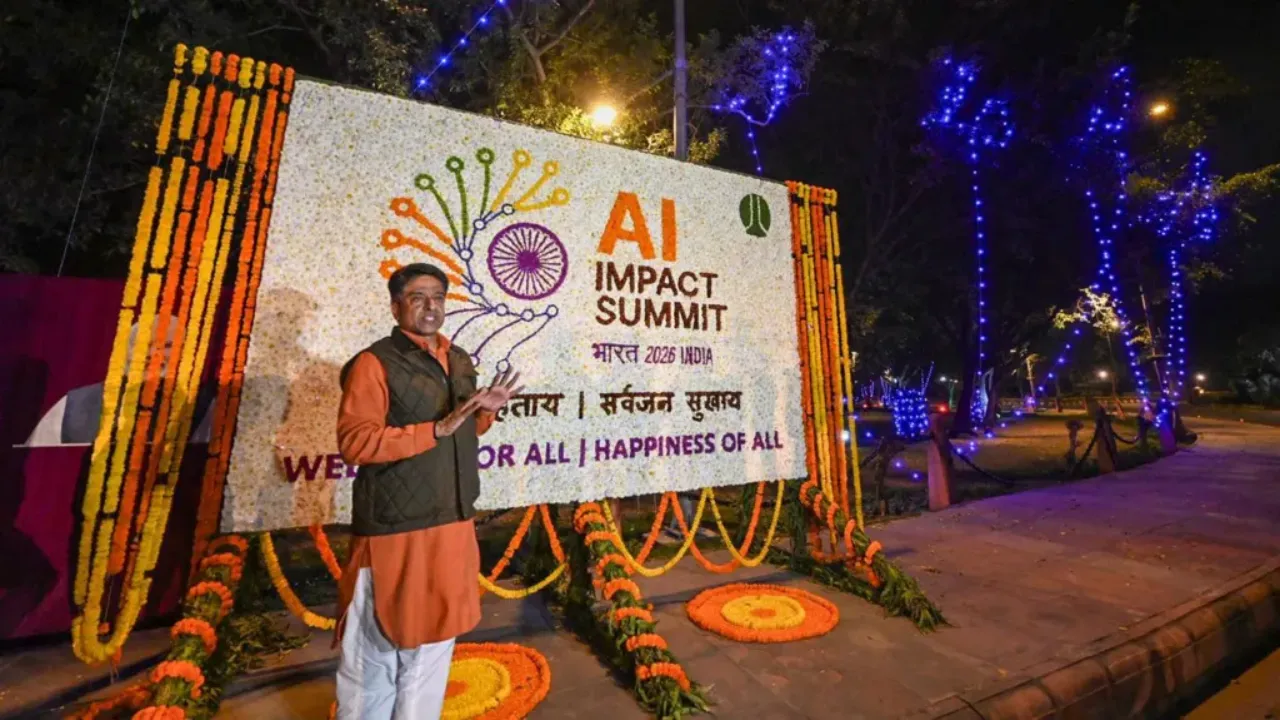
India’s AI Impact Summit 2026 puts the Global South at the center of the artificial intelligence debate, shifting focus from Western dominance to digital sovereignty, inclusion, and responsible AI growth.
AI Impact Summit 2026: Why India Hosting Matters
For years, the loudest voices in artificial intelligence have come from the United States and Europe. However, this week, the spotlight shifts to India as global leaders gather for the AI Impact Summit 2026 in New Delhi. That shift is significant because it signals a broader change in who gets to shape the AI future. Tech executives, policymakers, scientists, academics, and civil society leaders have arrived in India to discuss how the world should guide the AI revolution. Moreover, this year’s summit carries added weight because many countries in the Global South risk falling behind in the global AI race. Therefore, hosting the summit in India sends a powerful message about inclusion and shared responsibility. Last year’s gathering in Paris, then called the AI Action Summit, exposed deep geopolitical tensions. Western nations competed openly for influence, and US Vice President JD Vance made it clear that America’s leadership in AI was “non-negotiable.” However, the mood in Delhi appears different. Instead of dominance, the conversation now centers on access, equity, and long-term development.
Read More :- Big Player’ Azmatullah Omarzai Has the Final Say for Afghanistan at T20 World Cup
India’s Growing AI Ecosystem and Global Tech Role
India has steadily built a strong AI ecosystem over the past decade. Cities such as Bengaluru, Hyderabad, and Mumbai have become vibrant technology hubs. Additionally, global giants like Google, Nvidia, and Amazon have invested heavily in infrastructure and talent across the country. At the same time, India plays a less visible but equally critical role in the AI value chain. Thousands of workers manually label, categorize, and moderate data used to train AI systems. Consequently, they help shape the intelligence behind chatbots, image generators, and recommendation engines used worldwide. Journalist Karen Hao, in her book Empire of AI, highlighted how Indian firms handle content moderation for AI-generated images. Workers reportedly review disturbing content to decide what should be blocked. Meanwhile, according to Glassdoor data, the average AI data trainer salary in Chennai stands at around 480,000 rupees per year — under £4,000 or $5,000. In contrast, companies like OpenAI command valuations exceeding $500 billion. This stark imbalance underscores the economic gap within the AI ecosystem.
Read More :- We Know We Need To Be A Lot Better’ – England Reflect on Latest Narrow Escape in T20 World Cup 2026
AI Adoption Gap in the Global South
The 2026 International AI Safety Report reveals a striking divide. In some developed nations, more than 50% of the population uses AI tools regularly. However, across much of Africa, Asia, and Latin America, adoption rates likely remain below 10%. Language barriers further widen this gap. India alone recognizes 22 official languages and hundreds of dialects. Yet many leading AI chatbots support only about half of them. Therefore, millions of Indians cannot fully access AI-driven services in education, healthcare, governance, or banking. Professor Pushpak Bhattacharyya of IIT Mumbai has repeatedly stressed that inclusive language support is critical. Without AI systems that understand local languages, digital transformation excludes large sections of society. Consequently, the digital divide deepens instead of shrinking.
India’s AI Mission and Digital Sovereignty
To address these challenges, India has launched its own sovereign AI initiative, known as the AI Mission. The government has allocated approximately $1.2 billion to build domestic AI platforms and infrastructure. However, compared to the massive resources of American and Chinese tech giants, that budget appears modest. While companies like OpenAI, DeepSeek, and ByteDance release rapid updates, many Indian platforms remain under development. Nevertheless, India’s focus differs from that of global superpowers. Rather than chasing geopolitical dominance, policymakers emphasize economic transformation and digital sovereignty. Rajan Anandan, managing director at Peak XV, explains that AI in India represents more than technological advancement. Instead, it serves as a foundation for large-scale capability building, economic growth, and long-term competitiveness. Therefore, the government prioritizes sustainable development over short-term global positioning.
Global AI Governance and Safety Concerns
Governance remains a central theme at the AI Impact Summit. However, tensions persist over who should shape global AI rules. Professor Gina Neff from Queen Mary University London notes that this year’s summit embraces a “bottom-up” Global South approach. Consequently, the United States may play a less dominant role than in previous forums. Meanwhile, experts such as Jeni Tennison from Connected by Data argue for a more democratic and people-centered AI framework. They believe governments must collaborate to balance corporate power with public interest. Additionally, AI specialist Henry Ajder calls for pragmatic cooperation to address harms caused by both malicious and unintended uses of AI. Transparency also stands at the forefront of debate. Amanda Brock, CEO of OpenUK, urges companies to open up their AI models, including training data and system design. Without transparency, she argues, meaningful scrutiny and innovation in the Global South remain limited. However, many major AI firms still guard key components of their systems as proprietary secrets. At the same time, some observers worry that AI safety has slipped down the agenda. After the first AI Safety Summit in the UK in 2023, organizers quietly dropped the word “safety” from the event title. British computer scientist Professor Dame Wendy Hall has voiced concern that meaningful safeguards may not emerge from this year’s discussions. Although she supports participation, she remains cautious about expectations.
The Bigger Picture: Inclusion Over Domination
Ultimately, the AI Impact Summit 2026 represents more than another diplomatic event. It highlights a critical question: Who benefits from the AI revolution? While Western companies continue to lead in funding and innovation, countries like India demand a seat at the decision-making table. Moreover, by hosting the summit, India reinforces its position as the world’s largest “middle power” capable of bridging developed and developing nations. Therefore, the conversations in Delhi may shape not only policy frameworks but also the moral direction of AI development. If global leaders prioritize inclusivity, transparency, and equitable growth, the summit could mark a turning point. However, if geopolitics overshadows collaboration, the digital divide may widen further. Either way, India’s role in the AI conversation has undeniably grown stronger.
| FAQ | Answer |
|---|---|
| Why is India hosting the AI Impact Summit important? | It shifts the AI governance focus toward the Global South and digital inclusion. |
| What is India’s AI Mission? | It is a $1.2 billion initiative to build sovereign AI platforms and strengthen domestic AI capabilities. |