


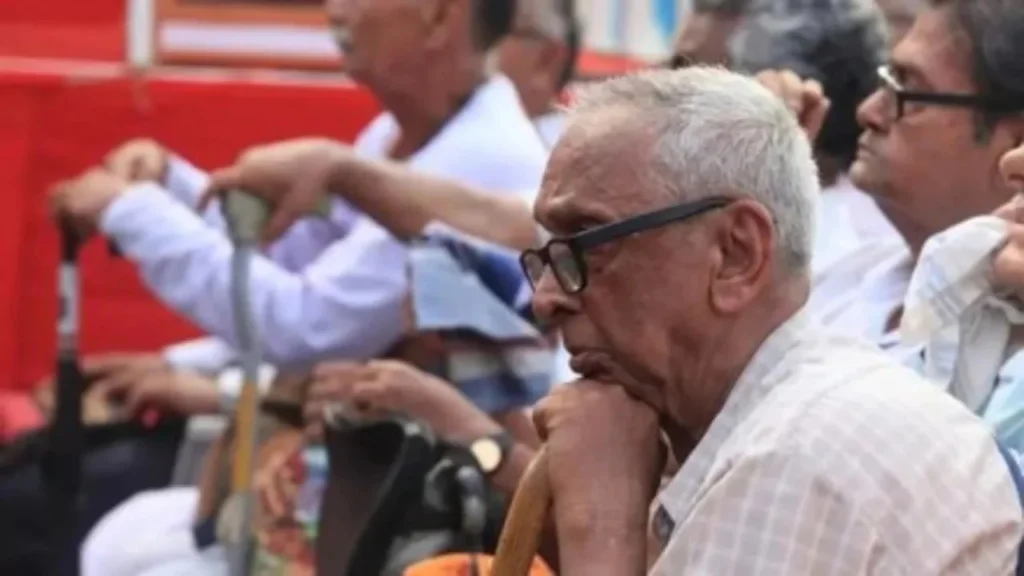
Millions of retired central government employees had been anxious about whether they would be covered under the 8th Pay Commission’s pension revision. The government has now put all speculation to rest with a clear and reassuring statement. The government clarified that if a government employee retires on or before December 31, 2025, he or she will also get pension revision, subject to issuance of government orders after recommendations are submitted by the 8th CPC in its report. This is the clearest official confirmation pensioners have received so far.
Union Minister Jitendra Singh affirmed that the government is committed to safeguarding the interests of each pensioner and family pensioner under the 8th CPC. As was the case with earlier pay commissions, the revision of pensions and family pensions would be done automatically, whether or not this has been spelt out in the Terms of Reference. “The inclusion of every pensioner and family pensioner is automatic, irrespective of the ToR,” he added. This statement directly addresses the fears of 69 lakh pensioners across India and confirms they will not be left behind.
Current Status of the 8th Pay Commission – Where Things Stand
The Government of India formally notified the constitution of the 8th Central Pay Commission on November 3, 2025. As of early 2026, the Commission has officially launched its website and is actively seeking feedback from stakeholders through the MyGov portal. The commission is currently in its data collection and consultation phase gathering inputs from government ministries, employee unions, pensioner associations, and the general public before drafting its final recommendations.
Read Also: New Renault Duster 2026 Launch Live Updates: Price, Variants, Specs – Everything Revealed Today
The 8th Pay Commission, chaired by Justice Ranjan Prabha Desai, has begun discussions with ministries, the Department of Expenditure, DoPT, and major employee unions. The focus right now is gathering detailed information on pay structures, inflation patterns, cost of living trends, and long-standing employee demands. The commission has an 18-month window to submit its report from November 2025, placing the expected report submission around mid-2027. After that, cabinet approval and official salary notifications are expected by late 2027, with actual salary disbursements likely arriving in 2028.
What Higher Pension Will Pensioners Actually Get?
The pension revision under the 8th Pay Commission will follow the same fitment factor applied to serving employees. The minimum pension of ₹9,000 under the 7th Pay Commission may rise to ₹20,500–₹25,740 under the 8th CPC. Dearness Relief (DR) will likely reset to zero once the revised pay and pension structure is implemented. This means the actual pension amount would be significantly higher even after the DR reset, providing genuine relief to retired employees managing rising healthcare and living costs.
Pensioners receive equal treatment, with revisions applying the same fitment factor to current pensions. Finance Ministry confirmed pension mandate in the Terms of Reference despite early speculation, ensuring no loss of DA hikes or post-retirement perks like gratuity and medical coverage. Arrears for past months may accompany implementation, calculated from January 2026 effective date, benefiting nearly 70 lakh retirees across defence, railways, and civilian services. Family pensioners will also benefit proportionally under the revised structure.
Fitment Factor – The Most Important Number to Watch
The fitment factor is the single most critical element determining how much salary and pension will increase under the 8th Pay Commission. It is the multiplier applied to an employee’s current basic pay to arrive at the revised pay. Experts and employee unions are advocating for a fitment factor between 2.28 and 3.00. If a fitment factor of 2.28 is applied, the minimum basic pay could jump from ₹18,000 to approximately ₹41,000. If a 3.00 factor is used, it could go as high as ₹54,000. While the 7th CPC saw a fitment factor of 2.57, the 8th CPC aims to better align government wages with current inflation and the rising cost of living in India.
Employee unions are pushing hard for a fitment factor of 2.86 to 3.00, arguing that inflation since 2016 justifies a more generous revision. The notional implementation date remains January 1, 2026. This means whenever the government approves the final recommendations, the revised salaries will apply retrospectively from that date. The higher the fitment factor ultimately approved, the larger the arrears lump sum payment employees and pensioners will receive for the period between January 2026 and the actual date of implementation.
DA Merger – Will It Happen Under 8th Pay Commission?
One of the most widely circulated questions among government employees is whether Dearness Allowance (DA) will be merged with basic pay before the 8th Pay Commission’s recommendations take effect. In late 2025, the Ministry of Finance clarified in Parliament that there is no immediate proposal to merge DA with basic pay under the current framework. This firmly settles the matter — DA will not be merged separately. Instead, the standard practice will be followed where DA is reset to zero when the new pay matrix takes effect and the fitment factor is applied to the old basic pay.
The existing DA, which reached 60% in January 2026, is typically reset to zero, and a fitment factor is applied to the old basic pay to create the new, higher 8th CPC basic pay. All other allowances like HRA and Travel Allowance are then recalculated proportionally, leading to a significant jump in gross take-home pay. Employees should understand that while DA will disappear temporarily, the new basic pay under the revised fitment factor will be substantially higher — more than compensating for the DA reset.
Arrears – When Will Employees and Pensioners Get Them?
The question of arrears is on every government employee’s and pensioner’s mind. Since the notional effective date is January 1, 2026, any salary or pension revision — once officially implemented — will carry retrospective arrears from that date to the actual date of notification. If everything follows the expected schedule, arrears could be paid in 2028, possibly in instalments. So while the notional date is January 1, 2026, the actual financial benefit may take time to reach bank accounts.
This means employees and pensioners should expect a substantial one-time lump-sum arrears payment potentially covering nearly two years of differential pay. For an employee at Level 6, the monthly difference between current and revised pay could be ₹40,000–₹70,000 per month — meaning a lump-sum arrears of potentially ₹8–14 lakh or more once disbursed. Pensioners will similarly receive their arrears as a lump sum, making this one of the most significant financial events for government retirees in recent memory.
How to Submit Your Views to the 8th Pay Commission
The 8th Pay Commission has opened a public consultation portal inviting suggestions from all stakeholders. Eligible stakeholders can submit their suggestions and views on pay structure, fitment factor, allowances, pension revision, and service conditions. There is no restriction on pay level or department, and inputs can be submitted individually without routing them through departments or unions.
To submit your views: Visit the MyGov portal and navigate to the 8th Pay Commission consultation section. Log in using your registered mobile number or email ID. Enter your suggestions on salary revision, allowances, fitment factor, or pension structure and submit online. The last date to send your reply was March 16, 2026. Central Government employees and pensioners are advised to wait for future orders from the government. If you missed this window, keep watching the official 8th CPC website for the next round of stakeholder consultations.
Conclusion – What Every Employee and Pensioner Must Know
The 8th Pay Commission is formally constituted, actively working, and the government has given a clear green signal that all 69 lakh pensioners — including those who retired before December 31, 2025 — will receive higher pension under the revised structure. Pension revision eligibility, cut-off dates, and methodology will be decided only after the Pay Commission submits its report. Central government employees and pensioners are advised to wait for future government orders.
The minimum pension is expected to more than double from ₹9,000 to ₹20,500–₹25,740, and serving employees can look forward to a 30–34% salary hike once the fitment factor is finalized. The report is due by mid-2027, with implementation and arrears likely arriving in 2028. Stay patient, stay informed, and keep tracking official announcements on the 8th CPC website and MyGov portal. Your revised salary and pension are coming — it is only a matter of time.
Frequently Asked Questions (FAQ)
Q1. Will pensioners get higher pension under the 8th Pay Commission? Yes. The government has confirmed that all pensioners who retired on or before December 31, 2025 will receive pension revision under the 8th CPC once its recommendations are approved and implemented by the government.
Q2. When will the 8th Pay Commission submit its report? The 8th CPC has 18 months from November 3, 2025 to submit its report — placing the expected submission around mid-2027. Government approval and notifications are expected by late 2027.
Q3. What is the expected minimum pension under the 8th Pay Commission? The current minimum pension of ₹9,000 is expected to rise to ₹20,500–₹25,740 depending on the final fitment factor approved by the government.
Q4. What is the fitment factor expected in the 8th Pay Commission? Experts and unions are projecting a fitment factor between 2.28 and 3.00. The 7th CPC used a fitment factor of 2.57. The final number will be confirmed in the commission’s report.
Q5. Will DA be merged with basic pay under the 8th Pay Commission? No. The Ministry of Finance has clearly stated there is no proposal to merge DA with basic pay. DA will reset to zero when the new pay matrix is implemented, and the fitment factor will be applied to the current basic pay.
Q6. When will employees and pensioners receive arrears? Arrears will be calculated from January 1, 2026 — the notional effective date. Based on the expected timeline, actual arrears payments may arrive in 2028, possibly disbursed in instalments.
Q7. How many government employees and pensioners will benefit from the 8th Pay Commission? The 8th CPC will cover approximately 50 lakh central government employees and 69 lakh pensioners, including family pensioners across defence, railways, and civilian departments.
Q8. Where can I submit my suggestions to the 8th Pay Commission? Suggestions can be submitted through the MyGov portal (mygov.in) under the 8th Pay Commission consultation section. You can log in with your mobile number or email and submit your views on salary, pension, or allowances.